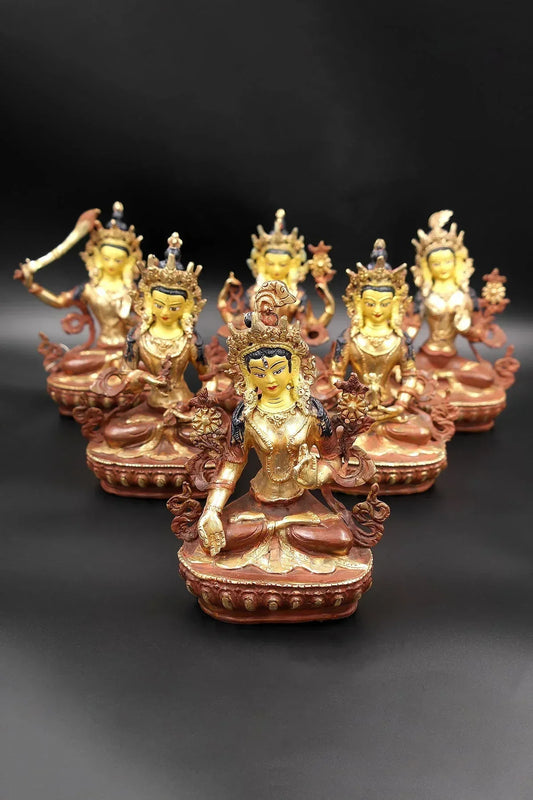
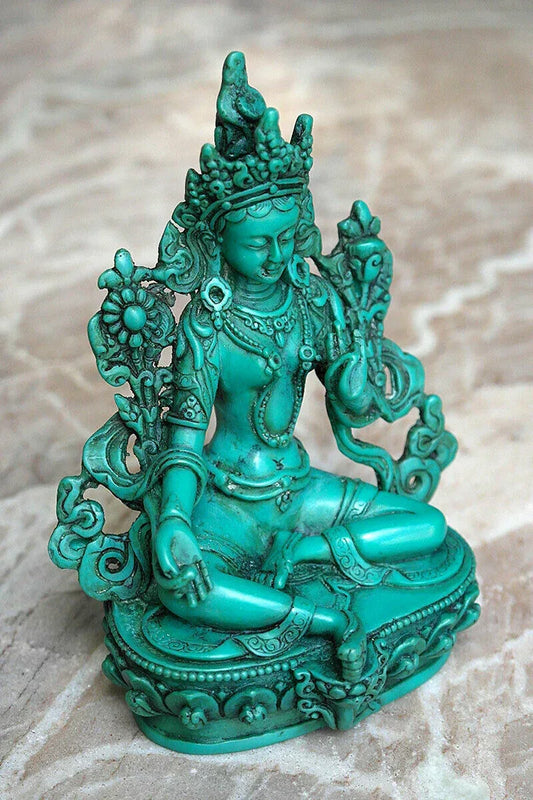
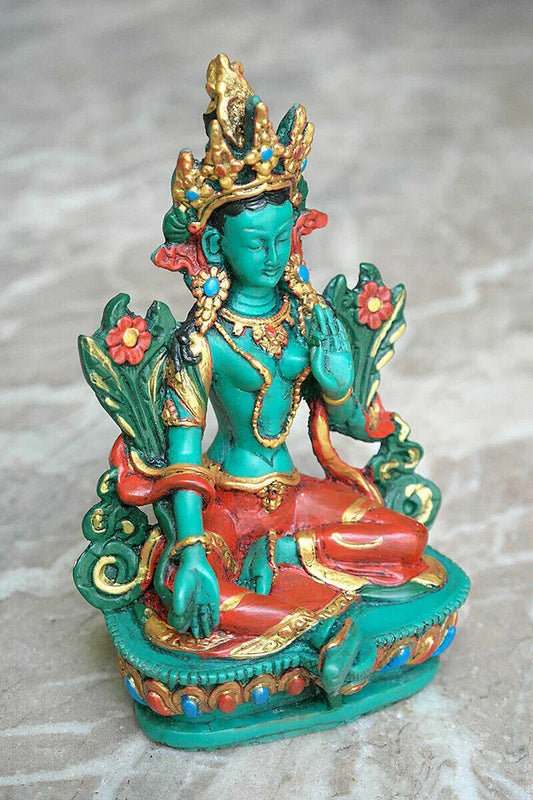
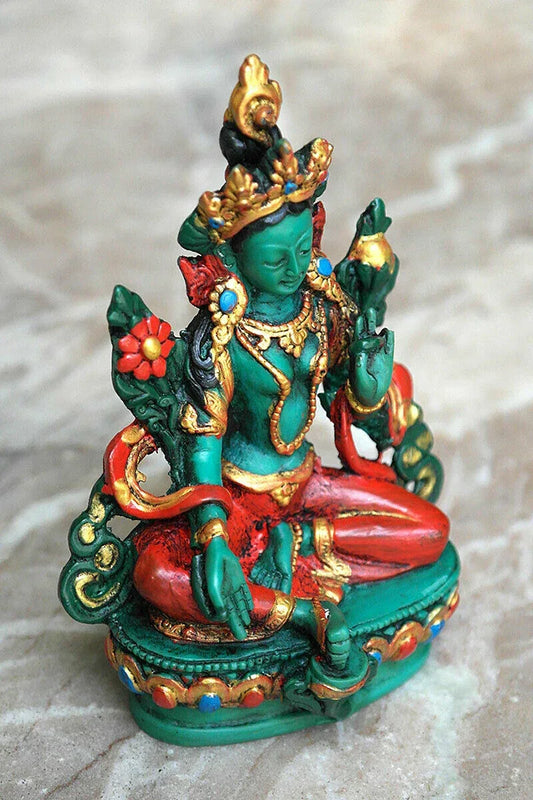
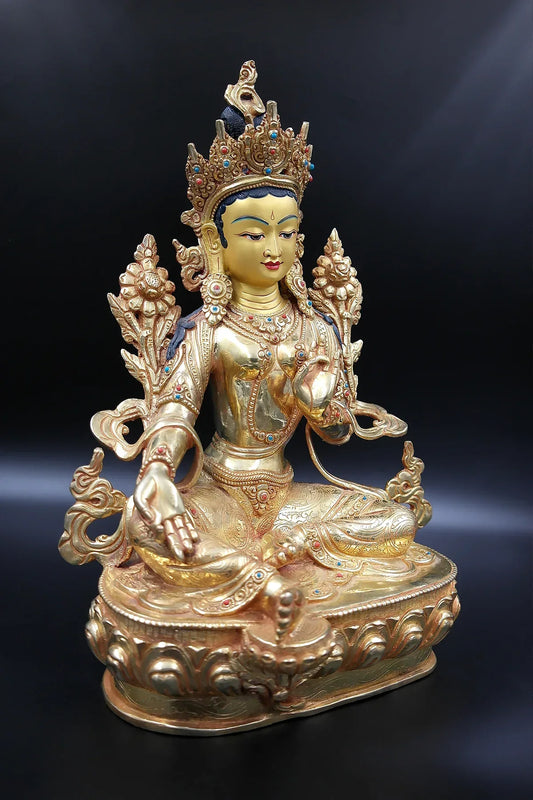
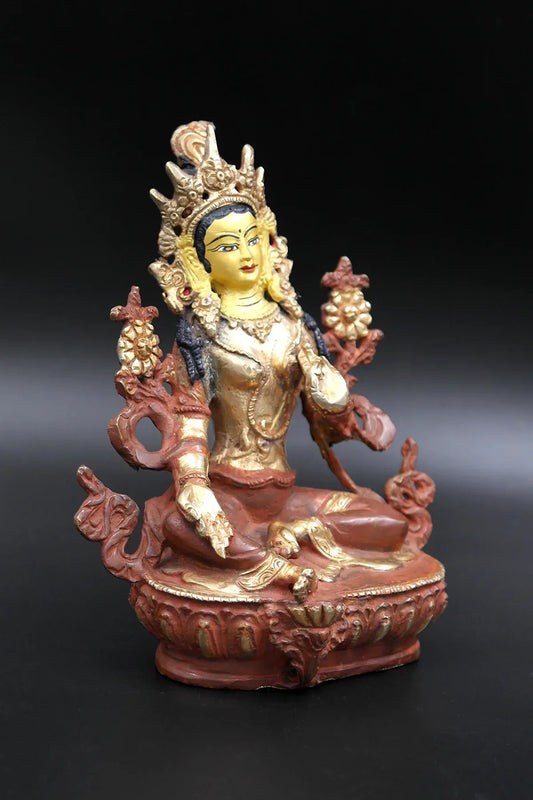
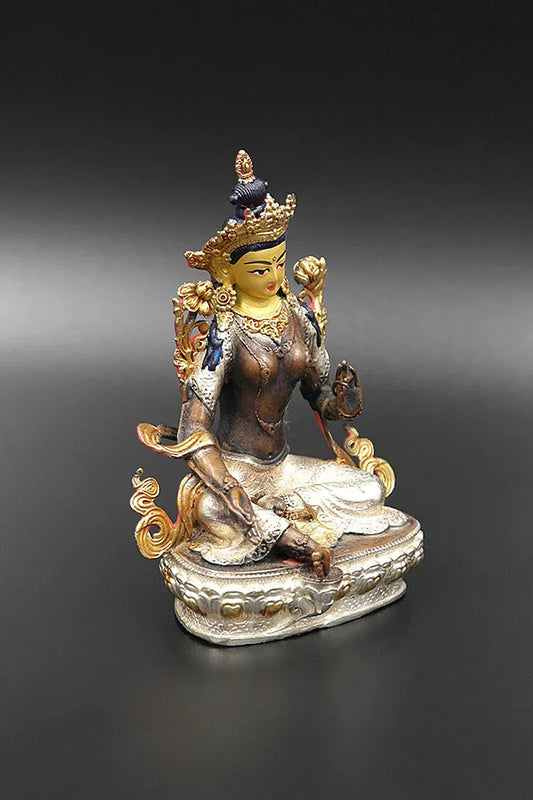
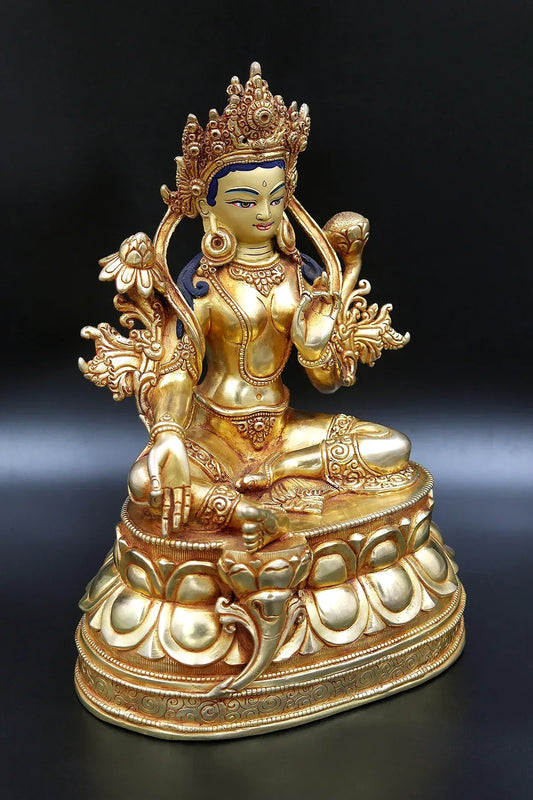
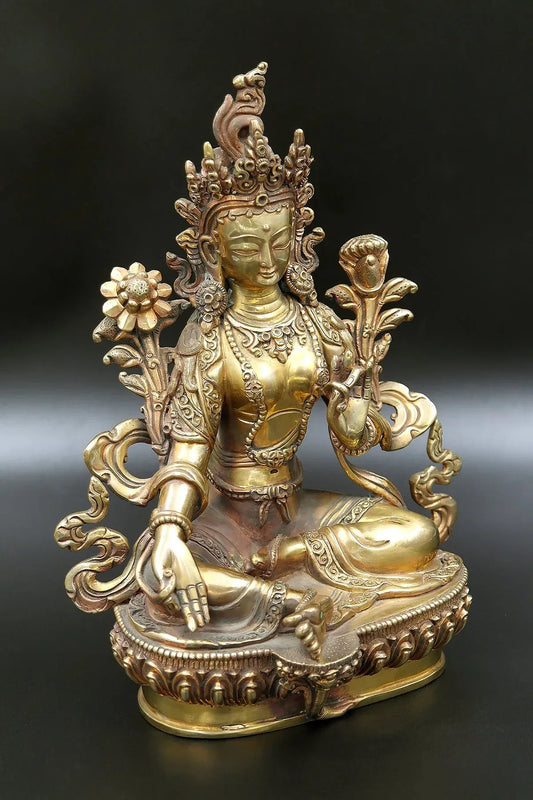
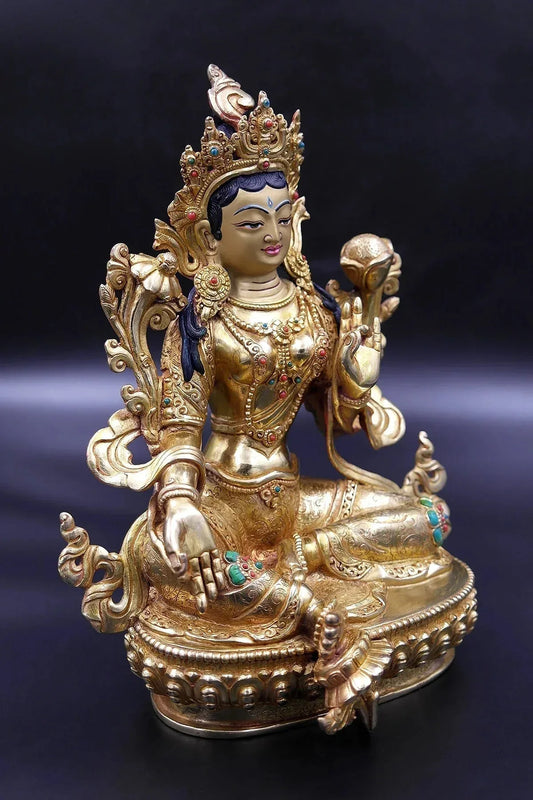
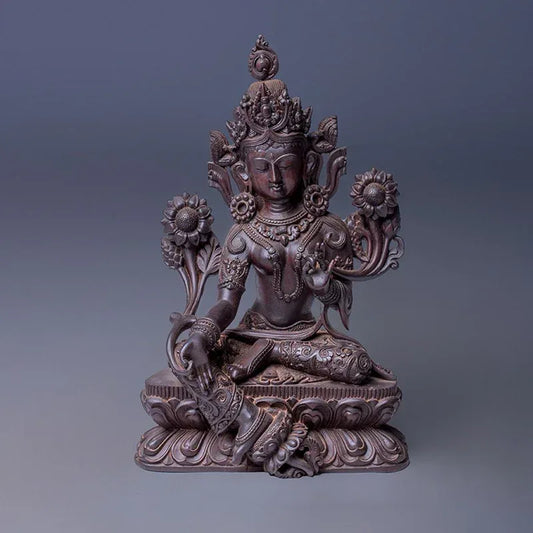
“Green Tara in the Himalayan tradition is seen as the embodiment of compassion in motion.” She is not generally worshipped for the purpose of either magical or miraculous benefit but rather as “a subtle signifier of the fact that awareness and compassion can indeed change our everyday world in silence.” The presence of a statue of Green Tara in one’s home or meditation space is “a silent friend who shows us in subtle ways that even the smallest acts of compassion can have meaning.”
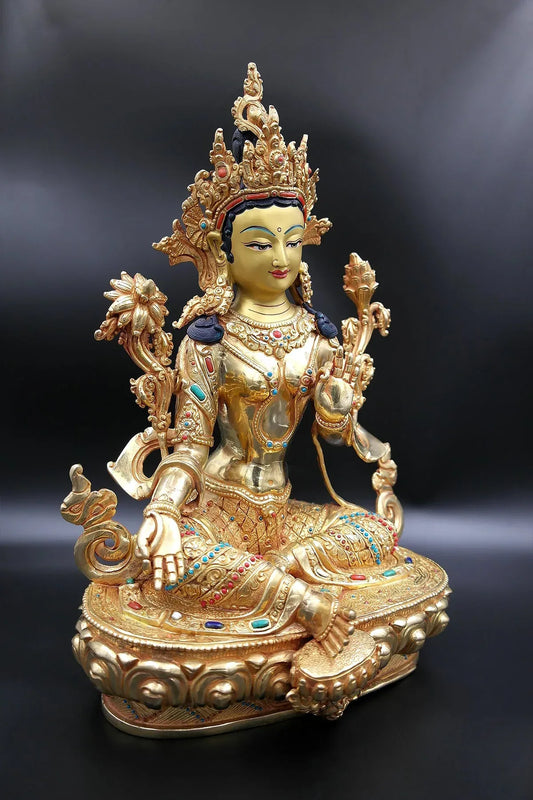
Green Tara is typically portrayed with a green body that symbolises life and activity. Her stance is one of grandeur and ease at once as she extends one leg forward as if ready to take action. Her hands make gestures of protection and giving. The lotus flower, also often found in her hands, is a representation of cleanliness and an awakened mind. It is written that none of these signs overpower but instead inspire silent reflections.
Practically speaking, the statue of Green Tara can be a focal point in meditation, prayer, or merciful reflection. Eat Your Greens describes how one can meditate in front of the statue “to develop patience, compassion, and bravery—most especially in times of need.” The object gradually becomes less separate from us and more like an “old friend”, reminding us “often gently to be careful.”
The tradition of making Green Tara statues has a long history and culture in the Himalayan region, including Nepal, where the skill of hand-carving and hammering has been developed over the years. All the statues are made with variations—slight variations, which are the mark of the human hand that has touched the statue and given it the final shape that the designer wanted. Handmade statues are totally different from the mass-produced type because of the sense of warmth that is involved.
Green Tara manifests in Himalayan Buddhist art the balance of calm awareness and active compassion. Her presence invites the viewer to reflect on how mindfulness can be expressed in everyday gestures, from listening with care to responding with patience. The subtle imperfections of this handmade statue remind us that compassion is a practice that is human and developing rather than a state.
So having a Green Tara statue near one should be like a quiet nudge to act kindly, show mindfulness, and have the courage to face the challenge. Because of this, she brings daily life closer to the Himalayan tradition of Buddhists. She offers a very quiet, reflective presence that urges compassionate engagement and living in mindfulness.

 Sold out