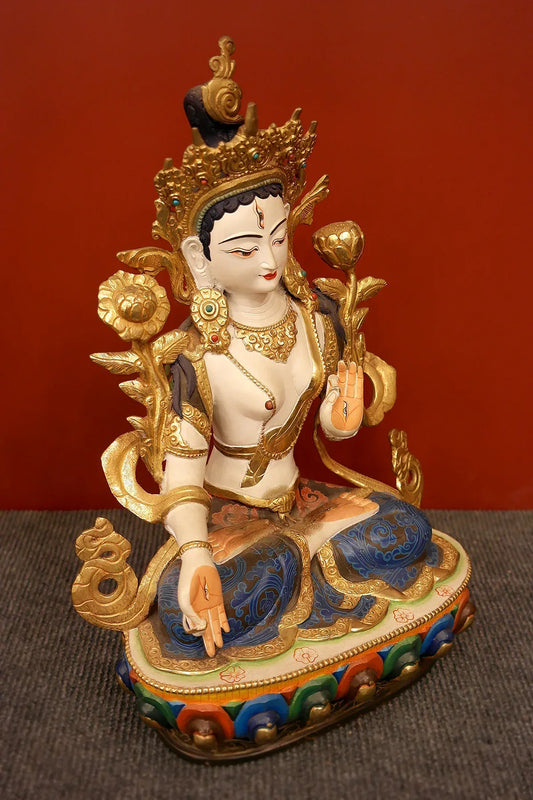
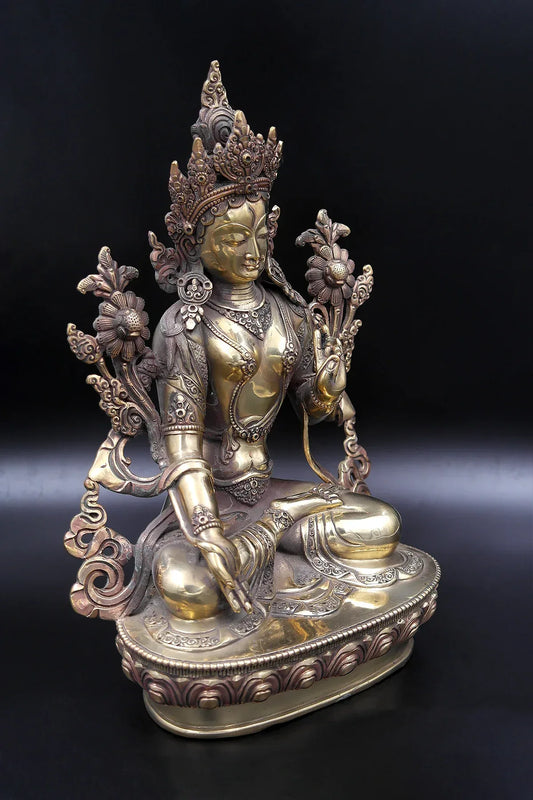
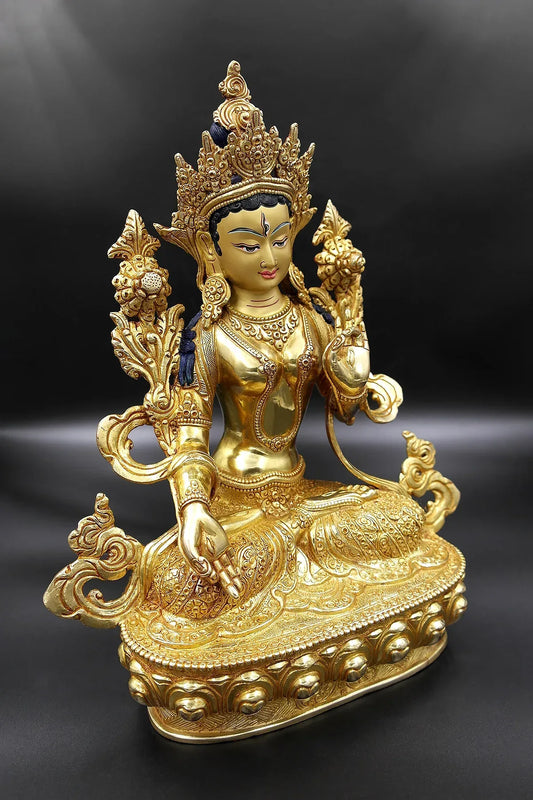
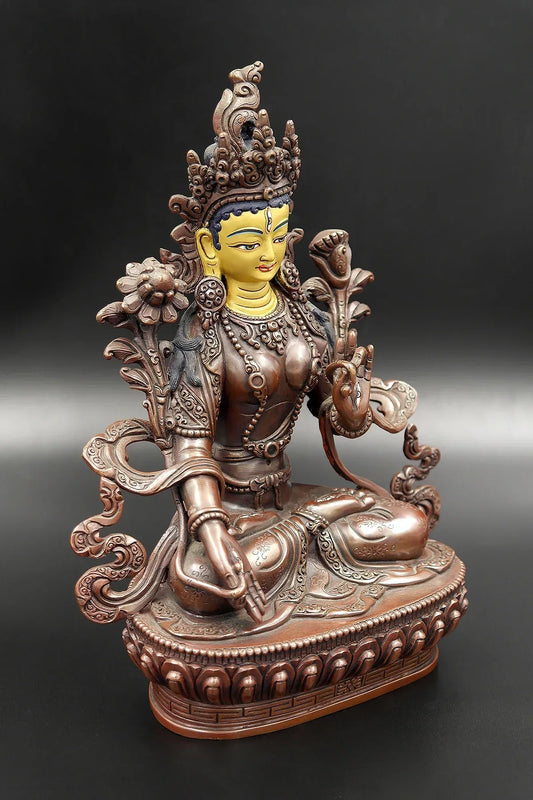
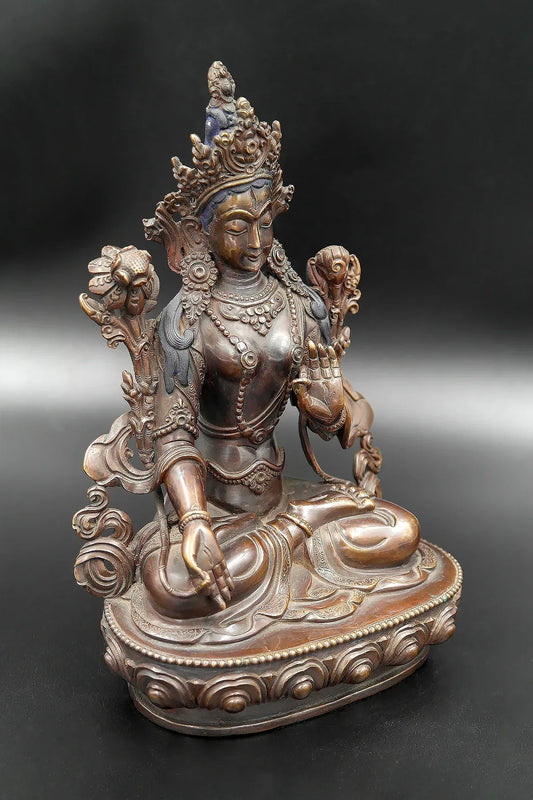
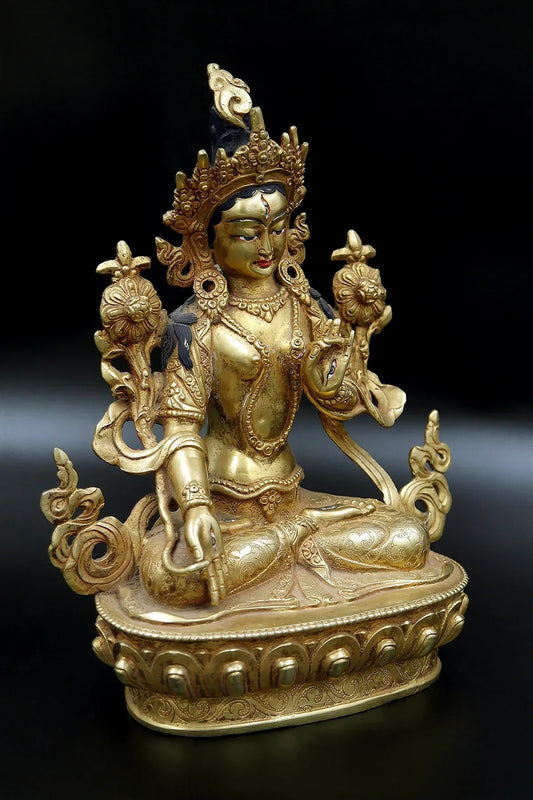
The figure of Sita Tara, otherwise known as White Tara, symbolises a gentle figure associated with feelings that are more related to caring, in a way that is not dramatic but associated with being able to feel stable. A figure of White Tara is something that is approached in a way that is not seen as something for exhibition but more so for its function in reminding one to be alert.
White Tara typically appears as a body that is white, symbolising purity and openness. The seven eyes, one on the forehead and one on each hand and foot, and then the two on the face, symbolise eternal vigilance. Rather than seeing it as some sort of mysticism, this attributing of eternal vigilance can be taken as a reminder to properly discern suffering and then attend to it with care. The lotus that White Tara clutches symbolises purity amid suffering and transition.
“In households, monasteries, or meditation halls,” one should place an image of White Tara for focus during prayer, mantra repetition, and meditation because most people will be in front of the image while cultivating patience and adopting a long-term attitude towards life and circumstances. What it’s all about isn’t an end goal but rather finding one’s way back.”
The craft of creating the statue of White Tara has a rich history in Himalayan art as well as Nepalese craftsmanship. Artists from these backgrounds have developed these skills as part of their inheritance. It takes a considerable amount of time to create a statue of this goddess regardless of the materials used, like brass or copper alloys.
A manually crafted statue of White Tara is quite different from commercially made religious artefacts. Minor discrepancies in terms of facial emotions or details indicate that it is made by a human. These discrepancies may be seen not as flaws but as characteristics of lived craftsmanship, experienced over time. The Himalayan Buddhist school of art believes that a personal touch is required in a statue of White Tara.
In this way, in an intimate space, a White Tara statue becomes more of an initiator of companionship than an object of devotion to be centred around. It rests peacefully in life, encouraging the viewer to live in patience, to offer care not in haste, or to engage in life with constant compassion in every step. Thus, White Tara again brings balance to life in relation to the tradition of the Himalayan Buddhists.