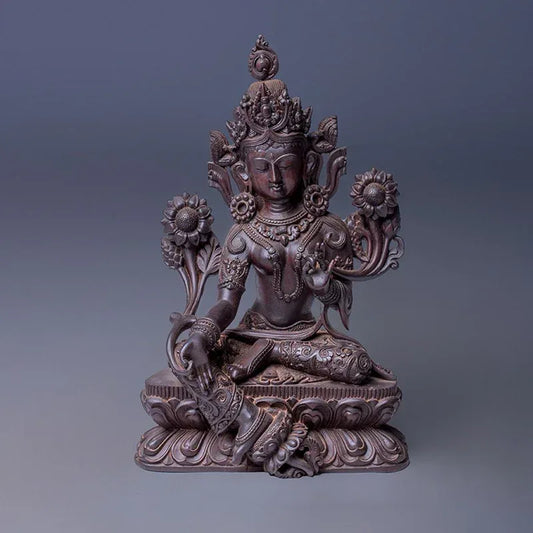
In the Buddhist tradition, an image of the Buddha is not intended to impress or instruct. It is intended to remind. This delicate form of the Wooden Buddha statue reflects the reminder in a very wooden sort of way. Indeed, the wooden element of the statue reflects the presence that Buddhist practice encourages. This presence is quiet, earthy, and engaged.
In keeping with tradition, statues of the Buddha have long been designed to embody awareness, equilibrium, and calm. In the pose adopted by the Buddha, whether meditating or lounging with calm intensity, there is always the implication of stability rather than perfection. Hands may be placed in such common positions of comfort, reassurance, or openness, but these positions are not to be analyzed or remembered. Rather, they provide a visual indicator of ease, exhorting one to pace and return to the moment.
Within the context of Himalayan and Nepalese culture, wood has traditionally been associated with the creation of significant and sacred artifacts. The wood available in the forests of the region was of a hard, workable quality, and the craftsmen of the region developed a particular understanding of it, making it an act of reverence and piety in the form of a Himalayan wooden Buddha. This requires the wood grain not being hidden but visible.
Nepali woodcraft has its roots in everyday life, temple structures, and home altars. Creating a carved Buddha statue requires the craftsman to react to the wood, its texture, its patterns, and even its nuances. This creates minute variations in each statue, which distinguishes a handmade product from an item produced in a factory. A handmade wooden Buddha statue feels less like an object and more like an entity that has been created over a period of time. Buddhist wooden sculptures may also reflect simplicity rather than ornamentation. Shiny surfaces or excessive details are unnecessary. Emphasis is still on a serene facial expression, harmonious shape, and a subtle interaction between materiality and meaning. Thus, simplicity makes it possible for the statues to merge seamlessly into a space rather than compete for notice.
The Wooden Buddha can be kept nearby, and the act can become a habitual rather than a statements-piece act. This can, with time, be a reminder to breathe and observe. This, therefore, serves as a reminder between the Himalayan Buddhist tradition and the modern world, with the provision of calmness and observation through the act of mindfulness without words.