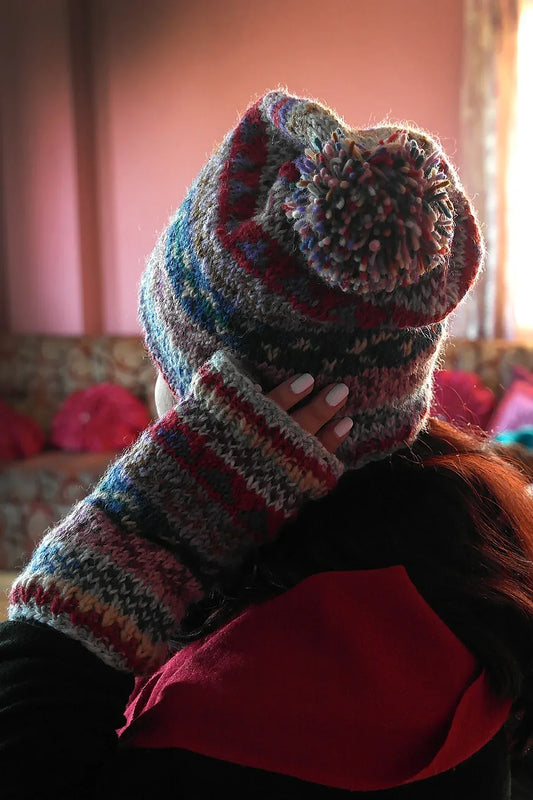
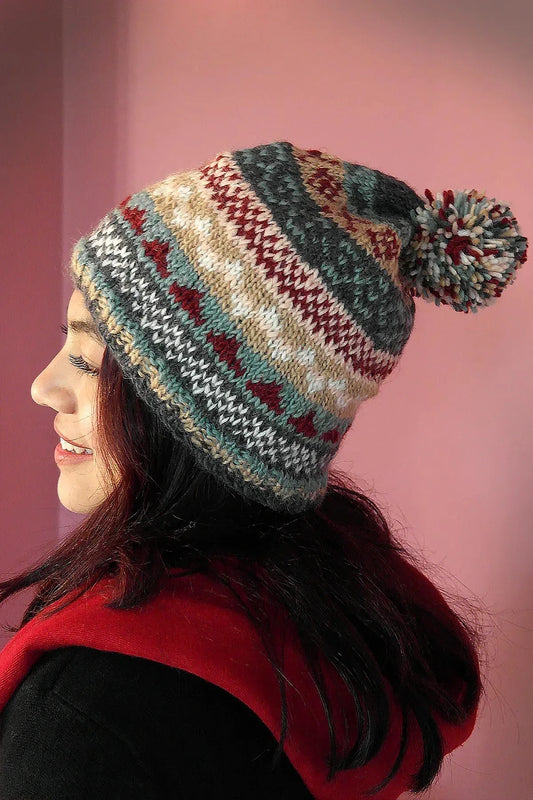
The cold climates of the Himalayan regions, Nepal, have their ways of affecting the daily routines of the people. The morning typically begins with the presence of frost, and the quest to create warmth can be accomplished through the use of materials that have been effective for many years. The woolen hat is one of these, which is quite simple but deeply embedded in the daily routines of the populace.
Natural wool is an equally important part of this legacy. Natural wool is able to retain warmth around one’s body and yet allow the flow of air to keep the head cool. Natural wool is very soft and thus helps the cap adapt to the movements of the wearer’s head without posing the least bit of discomfort to the person wearing it.
Many Nepalese wool hats are still produced by hand, with the knitting skills having been learned through generations of family and small groups of artisans. These ways of making things are painstaking and more experience-based than machine-based. Every handmade Nepalese woolen hat has some differences in it because of the touch or rhythm of the hands that made it. This, in turn, makes it distinct from machine-made ones.
The Himalayan wool cap is meant to be worn. It is worn on early winter mornings, during lengthy walks in the outdoors, on travel routes that go through cool areas, or even in generalized indoor settings in which stone floors and open windows permit a cool environment. Gradually, as time goes by, the wool gets soft and molds to the skin in a way that is not experienced in commercial winter wool caps.
The wool that the hat is made of is renewable, natural, and chimes in with the slower way of living. Using the wool of Nepal is good for small-scale production. The skill involved in this production is still important to the artisans. It will keep the link between clothing and nature.
Wearing the wool cap might thus have been a little way of embracing the cold periods of the year. There is the element of staying warm without feeling too warm at the same time. Wear the cap in the cold weather and stay connected to the Himalayas in a very simple way.