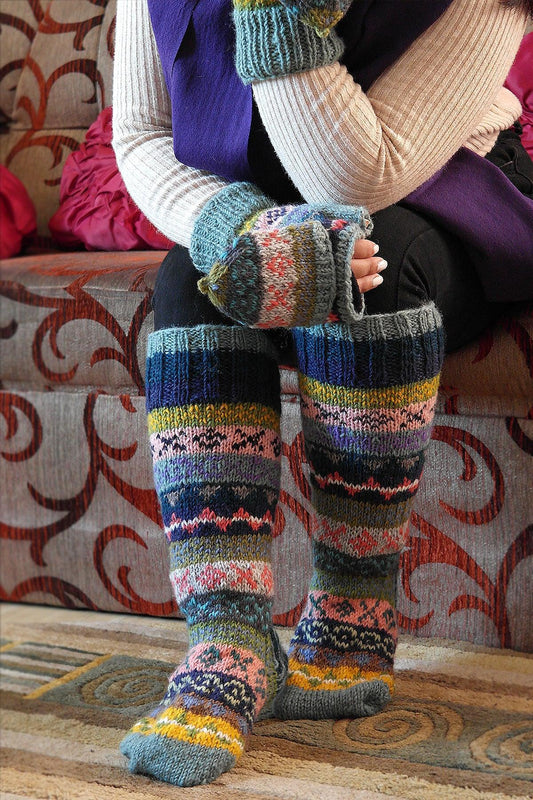
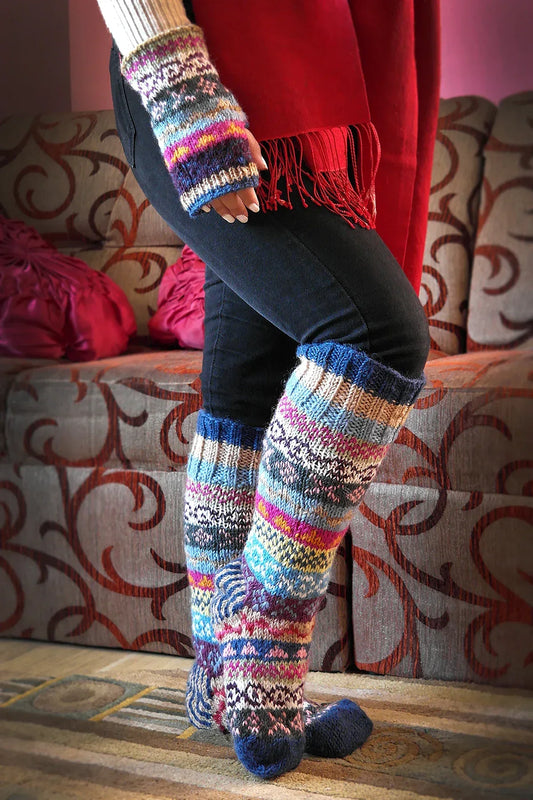
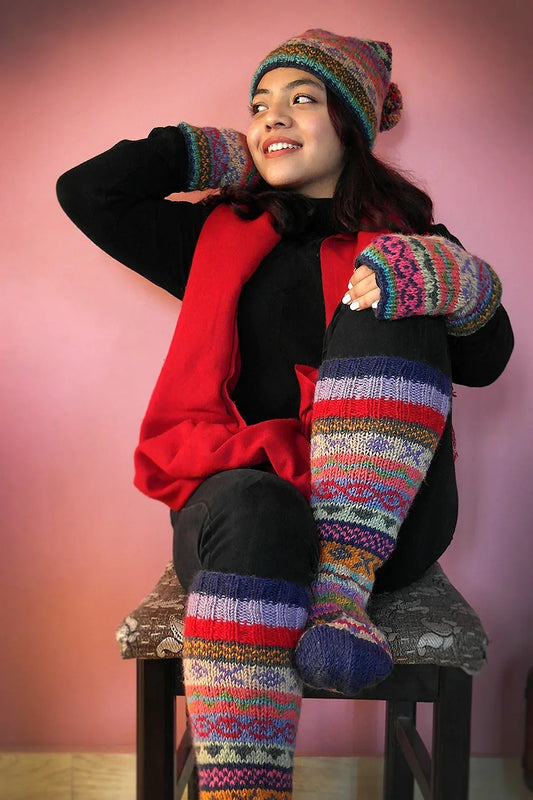
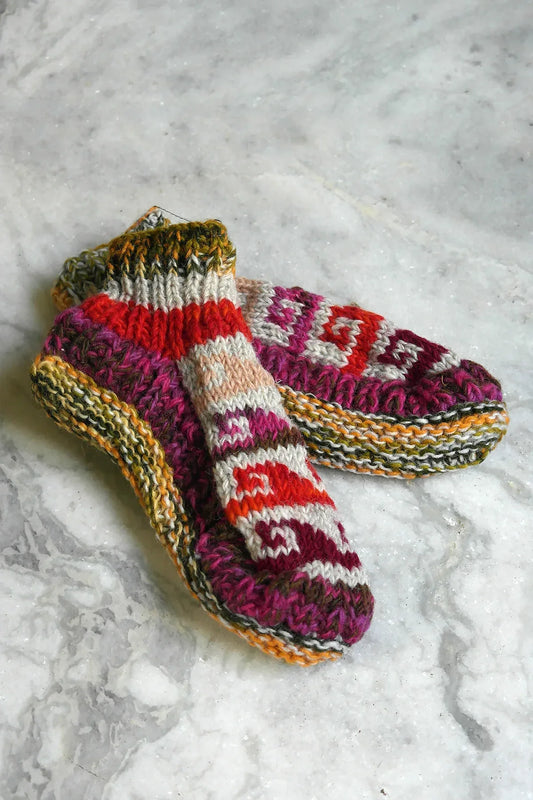
When referring to the Himalayan parts of Nepal, “It’s not unusual to see cold weather” because, to a large extent, “it’s a fact of life” in these areas. Stone homes, early mornings, and windy mountain altitudes have contributed to how people in these parts dress, from head to toe. Wool socks, as a product, has quietly served this region’s use.
Natural wool also has properties that are well adapted to this. Natural wool maintains warmth close to the body while at the same time allowing air to pass through. This helps maintain warm conditions in the feet for several hours. Natural wool is also flexible and can change with the temperatures and movements, and it remains warm without becoming heavy and soggy, unlike other artificial fibers.
Many traditional Nepali wool socks are still knitted by hand, often in small communities where knitting is like a daily routine. These work the yarn, loop by loop, using techniques passed down through generations. Each piece of hand-knitted woolen socks carries slight variations in texture and shape due to the hands that make them. These are not flaws but signs of care and individual craftsmanship so very rare in factory-made products.
These socks take shape from use, rather than mass production. Designed to be worn around the home on cold floors, tucked into shoes for running errands, or pulled on during early morning hours before the day gets underway, their comfort is rooted in familiarity the way in which wool softens over time and molds to the wearer's foot. Compared to machine-made winter wool socks, handmade ones can feel even more personal and enduring.
Wool is a natural and renewable resource that is suitable for a slower pace of life. Buying Nepali wool socks promotes smaller scales of production that prioritize resources and time as much as or even instead of speed. The skills that were learned in this way are also important in areas where this work provides a means of livelihood.
Slipping on a pair of woolen socks could be an easy manner of reconnecting. When the seasons are cooler, they are more than just a source of warmth. Then, they are the source of a small amount of comfort that links life with the ranges of the Himalayas.