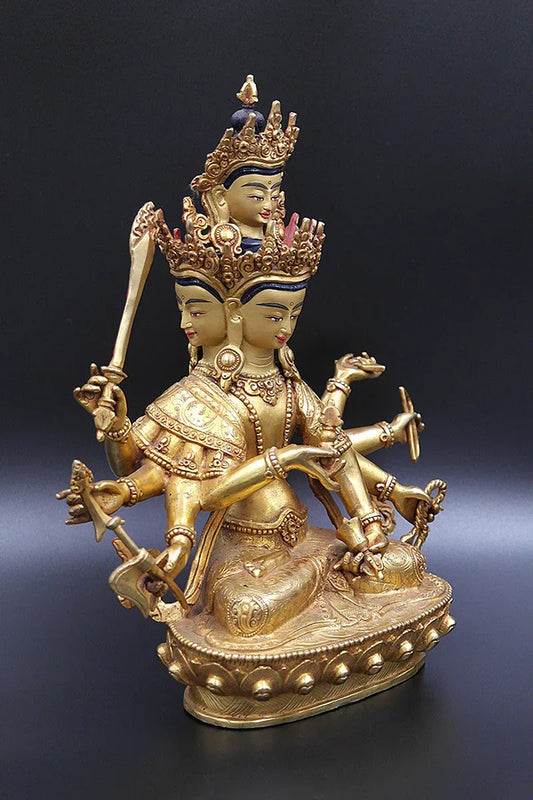
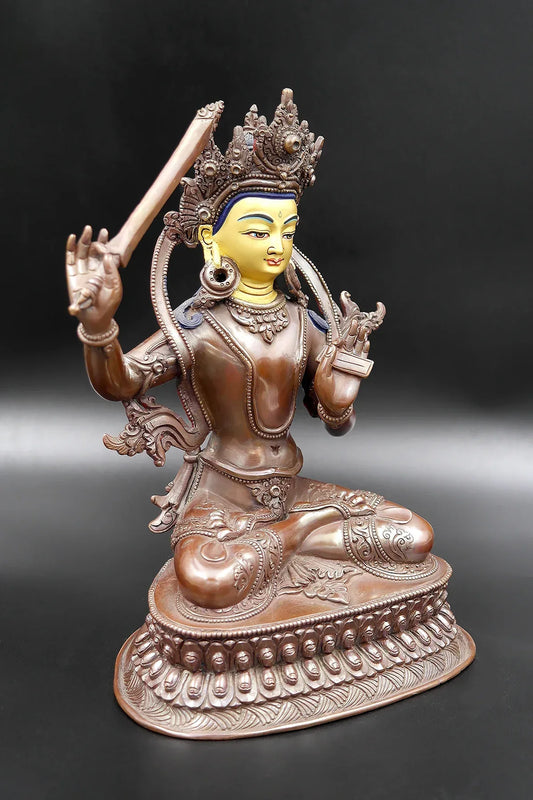
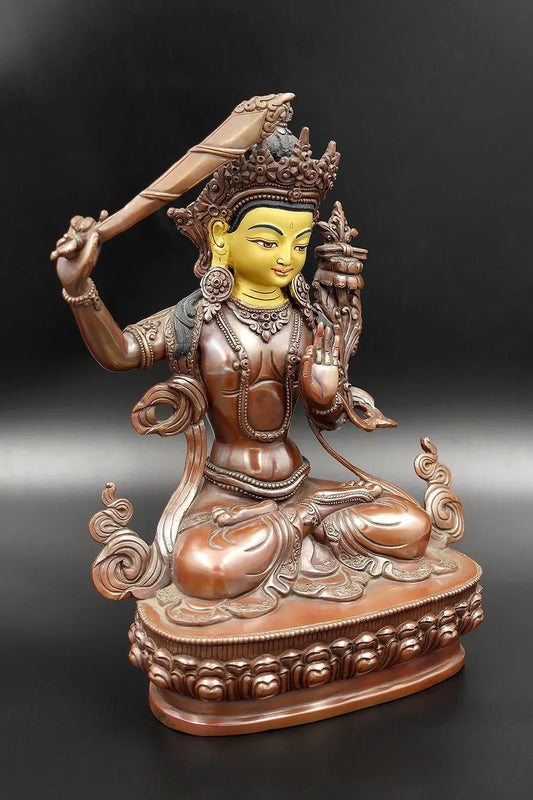
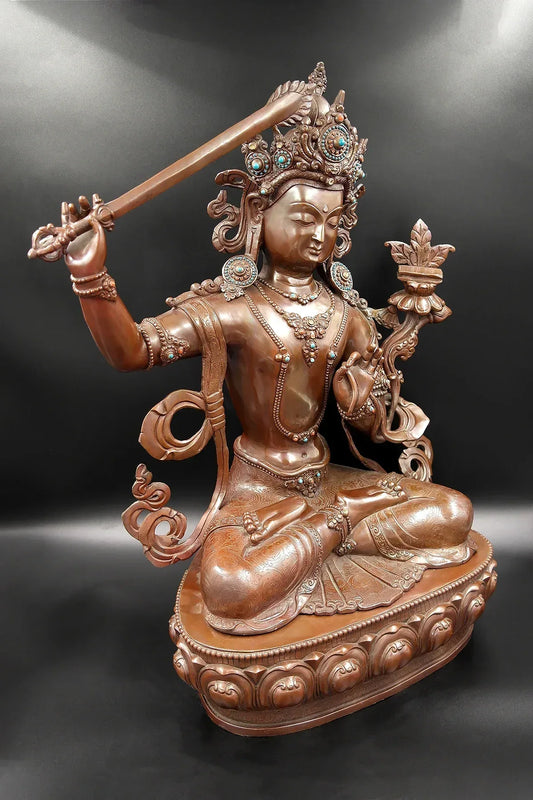
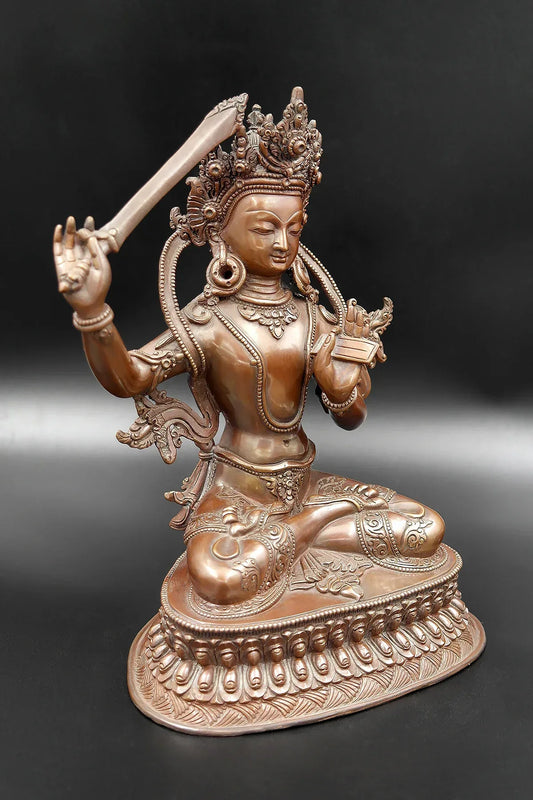
Manjushree or Manjushri is a figure of wisdom and clear comprehension in Buddhism. Manjushree is the symbol of the strength of insight that is built through consideration and study. The Manjushree statue can be found alongside the statues of other deities in a room or space where study and calmness are preferred over devotion. The statue of Manjushree is believed to exhibit the strength of silence.
Manjushree is often depicted with a youthfully fresh look, exemplifying purity of mind and the prospect of enlightenment available at all ages. With one hand, he holds a blazing sword that illustrates the power to purge confusion and phobia along with the tendency of conditioned thinking. On the other hand is the scripture that tends to relate to the Prajnaparamita Sutra. This refers to the concept that accesses the knowledge based on compassion and experience. He can be depicted in a seated or slightly dynamic position.
A Manjushree statue is traditionally used as a visual focus of meditation, study, or contemplation. Students, practitioners, and householders alike sit before his image to cultivate discernment, patience, and openness. Over time, the statue becomes less about form and more about presence, quietly supporting clarity in daily decisions and deeper understandings in learning.
Manjushree statue creation has long been a part of Buddhist art throughout the Himalayas, especially in skilled Nepal, which is still pursuing age-old practices of metal casting and hand-carving. Techniques that are time-consuming, precise, and deeply familiar with symbolic form come into play. Each handmade piece reflects subtle differences in expression and details, as it always is with the human touch. It is this sense of intention and care that gives the handmade statues their distinction from mass-produced religious items and gives them a quieter presence, one more grounded.
In the Tibetan Buddhist tradition, Manjushree’s role as a compassionate and responsible guide to wisdom is foremost. His representation serves as a reminder: learning is not an accumulation but a viewing and a doing, and the craftsmanship and symbolism combined in the statue suggest a meditative approach to knowledge.
Having a statue of Manjushree in close proximity can thereby act as a catalyst to stop, think, and seek answers in a humble manner. In this process, it indirectly bridges the world of everyday activity with that of Himalayan Buddhist tradition.